Related: Pressure Washer Nozzle Colors: What Each One Actually Does
A pressure washer setup is not one machine. It is a machine, a nozzle, a hose, and whatever you bolt onto the end of the wand, and the order you upgrade those parts matters more than the number printed on the box. I have run a mobile detailing business in Tampa for twelve years, which means I have washed driveways in July humidity, boat hulls with dried salt baked onto them, and one client's fence that grows mold back every rainy season like it is being paid to.
The number people shop by is PSI. The number that actually cleans is GPM. Flow rate moves the dirt off the surface, pressure is just how aggressive it feels while doing it. A machine with 1.7 GPM and the right nozzle will out-clean a machine with 3000 PSI and weak flow, every single time, and I will die on that hill.
So this is the pressure washer setup I would actually put together in 2026. One electric machine that covers most homes, one gas machine for the heavy jobs, one surface cleaner that upgrades either of them, and one replacement pump for the guy whose gas washer died in the middle of boat season.
Best Overall for Most Homes: Westinghouse ePX3050
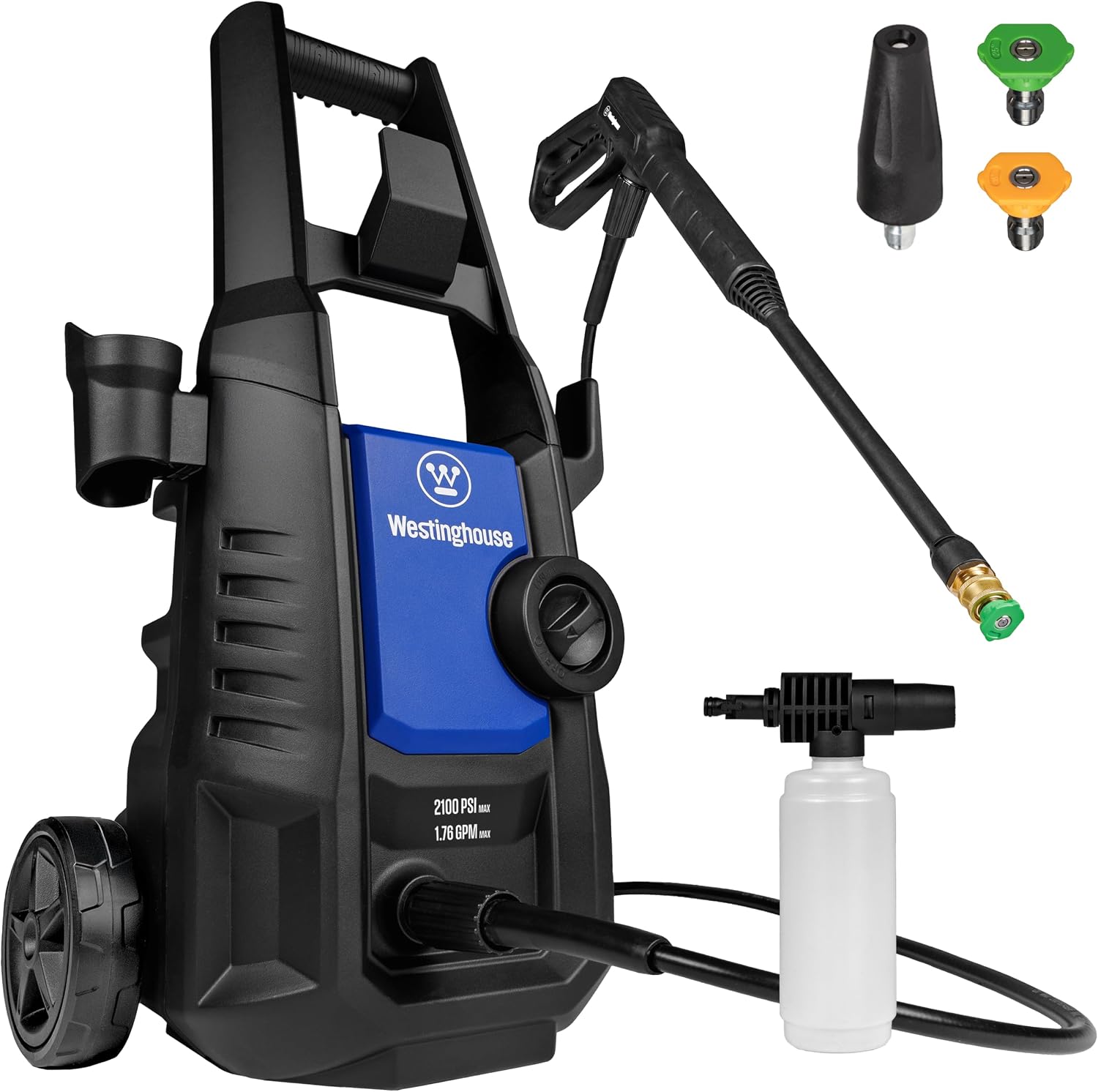
This is the machine I hand to friends who ask what they should buy, and it is the one I keep on the truck for light work. It runs 2100 max PSI at 1.76 max GPM, and 1.76 is the spec I actually care about. That is real flow for an electric unit, not the fake 2.0 GPM that some brands print while the machine gasps.
It ships with a foam cannon and a turbo nozzle, and that combination matters more than people realize. The foam cannon is your soap system. It draws detergent and lays it down thick, so you are not standing there with a bucket and a mitt wondering why your car still has a film on it. The turbo nozzle is your stripping tool for concrete, brick, and the edges of a driveway where the wand cannot reach.
Electric means no fuel, no exhaust, no pull cord, and no neighbors giving you a look at 7 a.m. on a Saturday. Plug it in, hook up a hose, and work. For cars, patios, fences, and a normal suburban driveway, this is the machine. What it will not do is peel ten years of grime off a two-car slab in an afternoon. That is not a flaw, that is physics.
Check current Amazon price, and while you are looking at it, read the spec line and confirm the GPM is listed. If a listing hides the flow rate, walk away.
Best Gas Pick for Heavy Jobs: Simpson Clean Machine 3200 PSI
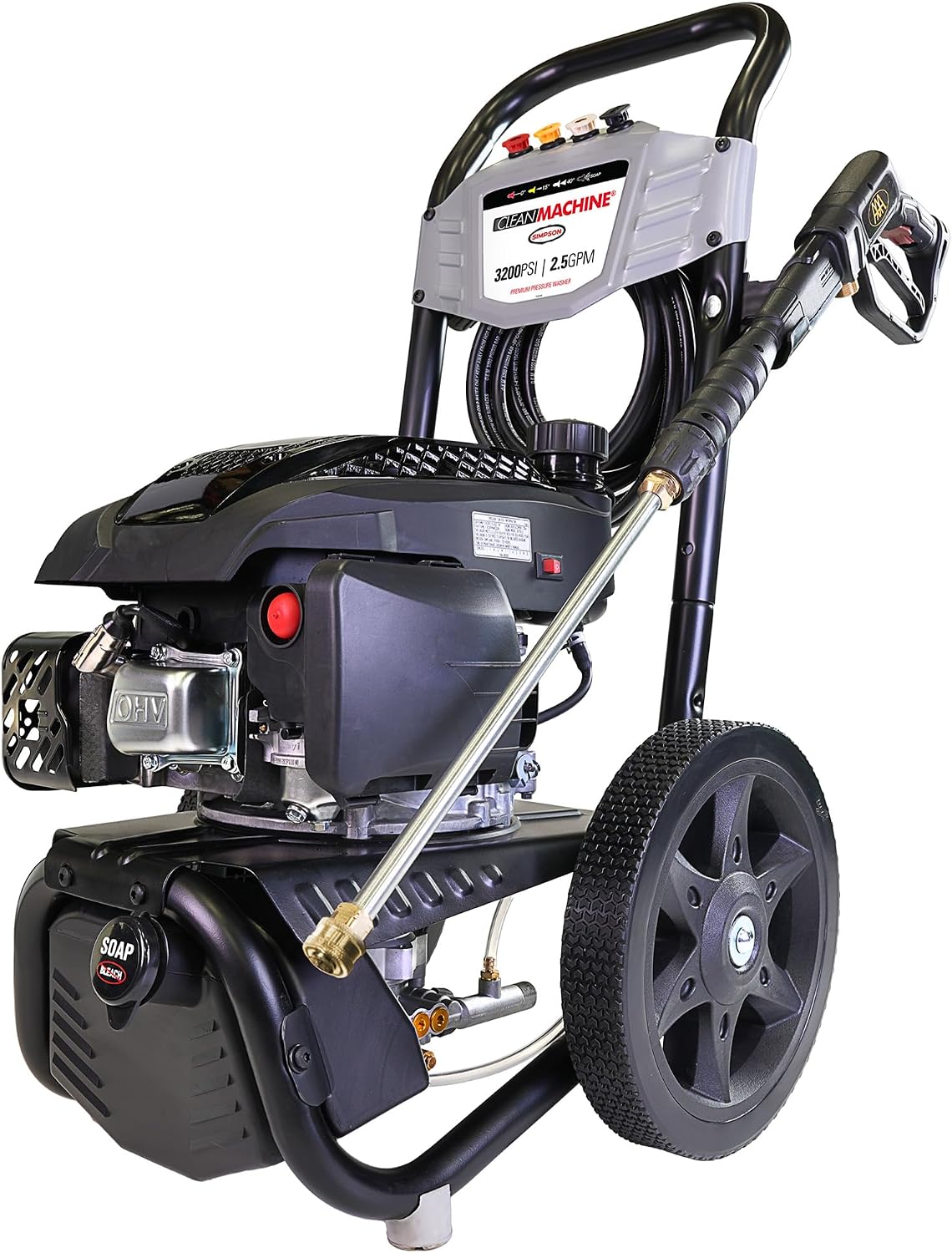
Here is where the math changes. 3200 PSI at 2.5 GPM is a completely different class of cleaning than any electric machine at this price point, and the reason is the 2.5. That is nearly a gallon and a half more water per minute than the electric unit, and flow is what flushes loosened dirt off a surface instead of just rearranging it.
This is the machine for boat hulls, long driveways, rental property turnarounds, and that fence I mentioned. It comes with a turbo nozzle, which is the correct starting point for concrete, and it has the duty cycle to run for an hour without you standing around waiting for it to cool down. Gas engines do not care about extension cords or outlet placement. They care about fuel, oil, and a little maintenance attention.
The tradeoffs are real and I will not pretend otherwise. It is loud. It is heavy. It needs gas and oil and a winterization routine, and if you let it sit for eight months with old fuel in it, you will be rebuilding a carburetor in your driveway. My own gas machine is the loudest thing I own and I still keep it for boat season, because when a hull has dried salt and growth on it, flow wins.
Check current Amazon price and be honest with yourself about frequency. If you wash your car twice a month and your patio once a year, buy the electric one.
The Upgrade That Changes Everything: Simpson 16.5 Inch Surface Cleaner
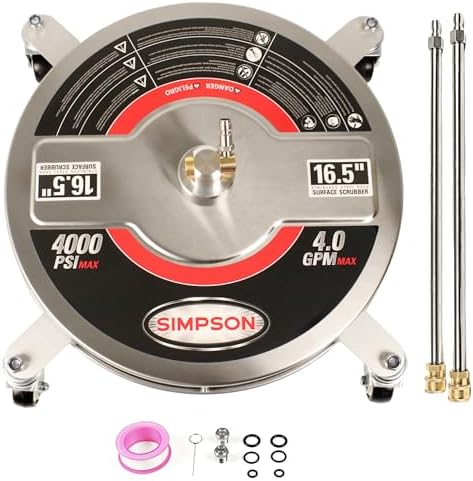
If you buy one thing from this article, buy this. A surface cleaner is a spinning bar under a dome, and instead of a single pencil-thin stream of water you get a wide, even pass that cleans flat concrete without leaving zebra stripes behind. Anyone who has tried to do a driveway with a wand knows exactly what zebra stripes are.
It also cuts the job time hard, keeps the water contained under the dome instead of spraying it back up your legs, and it saves your back because you are walking, not hunched over a wand at ankle height. This one is 16.5 inches of stainless steel, which is the size class you want for driveways and patios. Too small and you are making twice the passes. Too large and you need more flow than you have.
That is the one thing to understand: a surface cleaner wants flow. Bolted to the gas machine at 2.5 GPM, it is a professional tool. Bolted to the electric machine at 1.76 GPM, it still beats a wand for evenness, but it will not spin as fast or clean as aggressively. Pair it with the machine that matches your workload.
Keep it on flat hard surfaces only. Not walls, not cars, not wood decks, not anything with loose paint you were hoping to keep.
Check current Amazon price, and note that this is the cheapest way to make a mediocre washer look professional.
Keep the Old Machine Alive: YAMATIC 3/4 Inch Shaft Pump
The pump is the part that dies first on a gas pressure washer. The engine usually has plenty of life left in it, but the pump has been running abrasive water through it for years, and one day it stops building pressure or starts leaking from the housing. Most people throw the whole machine out at that point. That is a waste of a perfectly good engine.
This is a 3/4 inch shaft horizontal pump rated to 3200 PSI and 2.5 GPM, which puts it in the same output class as the gas machine above. If you have a horizontal shaft gas washer with a tired pump, this is the replacement path.
Before you order, do the homework. Measure your existing shaft diameter, confirm the bolt pattern, and check which side the water connections come out of. A pump that does not bolt up is a doorstop. If you have never done this job, watch a video first, because it is a few bolts and two hoses, not an engine teardown.
Check current Amazon price, and compare it against the cost of a new machine. That comparison is the whole point of this part.
The pressure washer setup reference table
This is how I think about the four pieces as one setup. Flow rate is the max GPM the unit is rated for. Match the attachment to the machine you actually own.
| Setup piece | Type | Max flow | Best for | Notes |
|---|---|---|---|---|
 Visit on Amazon → Visit on Amazon →Westinghouse ePX3050 |
Electric | 1.76 GPM | Cars, patios, fences, light driveways | Foam cannon and turbo nozzle included |
 Visit on Amazon → Visit on Amazon →Simpson Clean Machine |
Gas | 2.5 GPM | Boats, long driveways, weekly jobs | Loud, heavy, real flow |
 Visit on Amazon → Visit on Amazon →Simpson 16.5 inch surface cleaner |
Attachment | Matches your machine | Flat concrete, driveways, patios | Even cleaning, no zebra stripes |
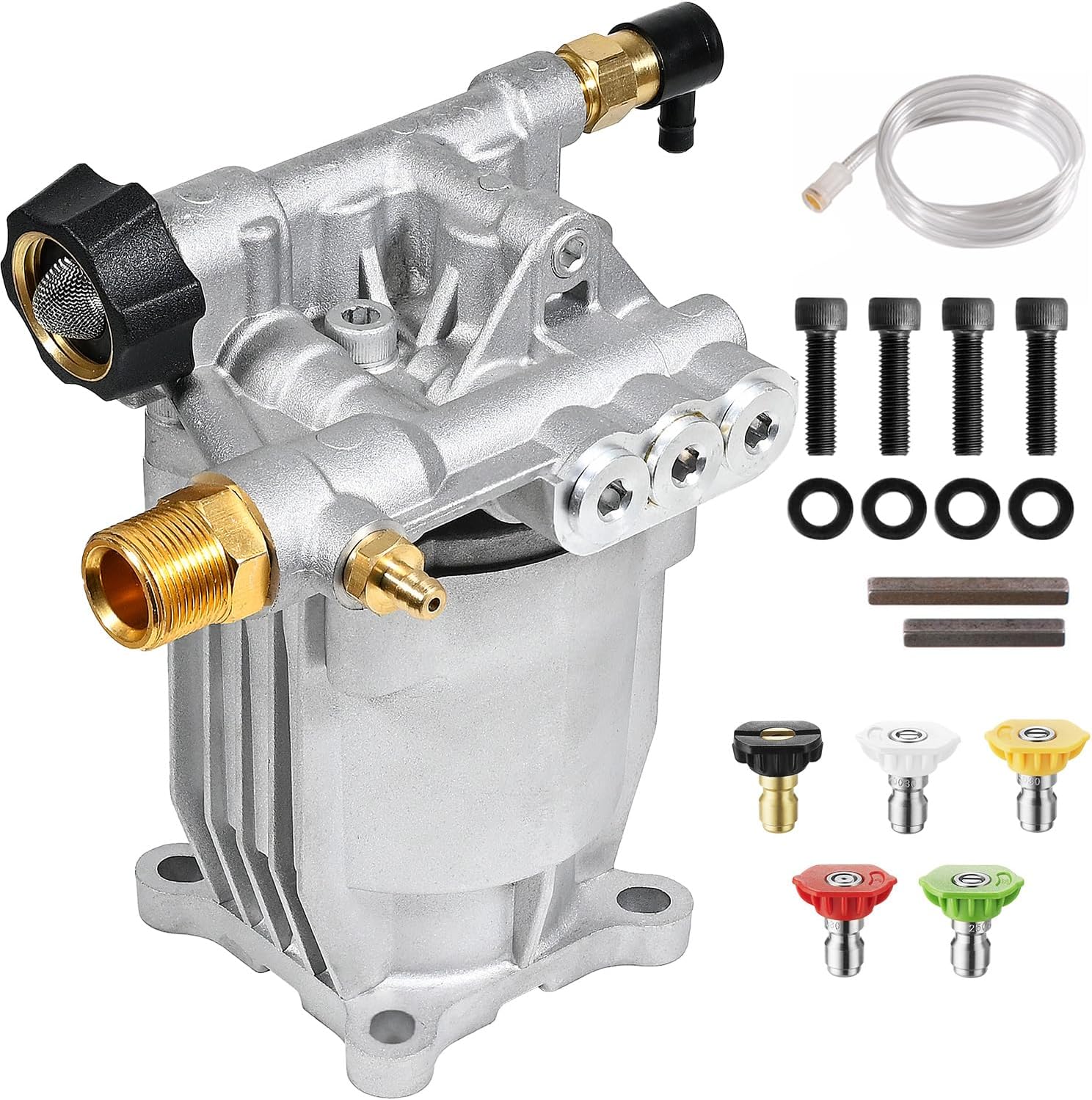 Visit on Amazon → Visit on Amazon →YAMATIC 3/4 inch shaft pump |
Replacement part | 2.5 GPM | Reviving a dead gas washer | Check shaft size and bolt pattern |
The pattern in that table is simple. Electric covers the car and the patio. Gas covers the boat and the slab. The surface cleaner upgrades either one. The pump keeps a good engine out of the landfill.
How I judge a pressure washer
I do not review a machine from a driveway photo. Here is what I check, in order.
Real GPM, not advertised GPM. The flow rate is the whole ballgame. If a listing leads with PSI and buries the GPM, that tells you something.
Detergent draw. A washer that cannot pull soap is a hose with a trigger. Whether it is an onboard tank or a foam cannon on the wand, there has to be a soap path that does not clog after three uses.
Hose and wand quality. A stiff hose that kinks every five feet will make you hate a machine that cleans perfectly well. A wand that feels like a toy flexes under pressure and ruins your control.
Duty cycle. Cheap electrics overheat and need to sit. Gas runs all day. Know how long you actually plan to work.
Nozzle set. You need at minimum a soap nozzle, a 40 degree for rinsing, a 25 degree for general work, and a 0 degree or turbo for concrete. A machine with a bad nozzle set is a machine you will be buying parts for.
What the numbers actually mean
PSI is pressure. GPM is flow. Multiply them and you get a rough cleaning unit number, which is the closest thing to a fair comparison between two machines. The electric unit here lands around 3,700 and the gas unit around 8,000. That gap is why the gas machine feels like a different tool on concrete, and why the electric machine is still the right answer for a car.
None of that helps if the nozzle is wrong. A 25 degree nozzle at 1.76 GPM cleans better than a 0 degree nozzle at 2.5 GPM on a car panel, because the wrong nozzle at higher flow just means you are stripping paint faster.
Also: water supply matters. A weak spigot starves a gas machine and you will blame the pump. Check your flow at the tap before you blame the tool.
Should you buy the Westinghouse ePX3050?
Yes, for most people. It is the honest electric machine in this list. 2100 max PSI and 1.76 max GPM, a foam cannon for soap, and a turbo nozzle for concrete, all in one box with no fuel and no cord-pulling. It handles cars, patios, fences, and a normal driveway.
It will not strip a heavily soiled slab the way the gas machine will. If that is your job, buy accordingly.
Should you buy the Simpson Clean Machine 3200 PSI?
Yes, if you clean often and you clean big. The 2.5 GPM is the reason, not the 3200 PSI. Boat hulls, long driveways, rental turnarounds, and moldy fences all fall to flow, and this machine has it. The turbo nozzle gets you started on concrete on day one.
You pay for it in noise, weight, fuel, and maintenance. If you wash your car twice a month, that trade is not worth it.
Should you buy the Simpson 16.5 inch surface cleaner?
Yes. This is the best money in the entire article. It makes flat concrete cleaning faster, more even, and easier on your back, and it works with either machine, though it shines with the gas one. Stainless steel, 16.5 inches, driveway sized.
Flat hard surfaces only. No walls, no cars, no decks.
Should you buy the YAMATIC 3/4 inch shaft pump?
Only if you own a gas washer with a dead pump and a healthy engine. It is rated to 3200 PSI and 2.5 GPM, so it matches the output class of the machine above, and it costs a fraction of a new washer. Measure your shaft diameter and bolt pattern first.
Check current Amazon price and do the math against a replacement machine. That is the only question that matters here.