Related: Pressure Washer Psi Vs Gpm Explained
Most pressure washer detergent comes in a jug, gets poured into a reservoir, and ends up half-sucked into the pump before the siphon tube clogs. I've burned through enough soap to know that the cheap stuff leaves streaks, the expensive stuff isn't always better, and the detergent system on most washers is a gimmick designed to make you think you're foaming when you're really just spraying tinted water.
The job of detergent is to loosen the grime so the water can rinse it off. That's it. The pressure does the work, the soap just makes the water better at its job.
This article isn't a list of products with affiliate links. It's a guide to what detergent actually does, why some formulas cost $8 a gallon and others cost $40, and how to keep your siphon tube drawing without clogging every job.
The Short List
The Short List: How to Drive Business Development by Focusing on the People Who Matter Most
Cheap, works on everything, rinses clean
The low price comes with fewer refinements than the stronger picks.
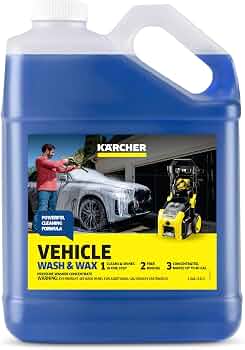
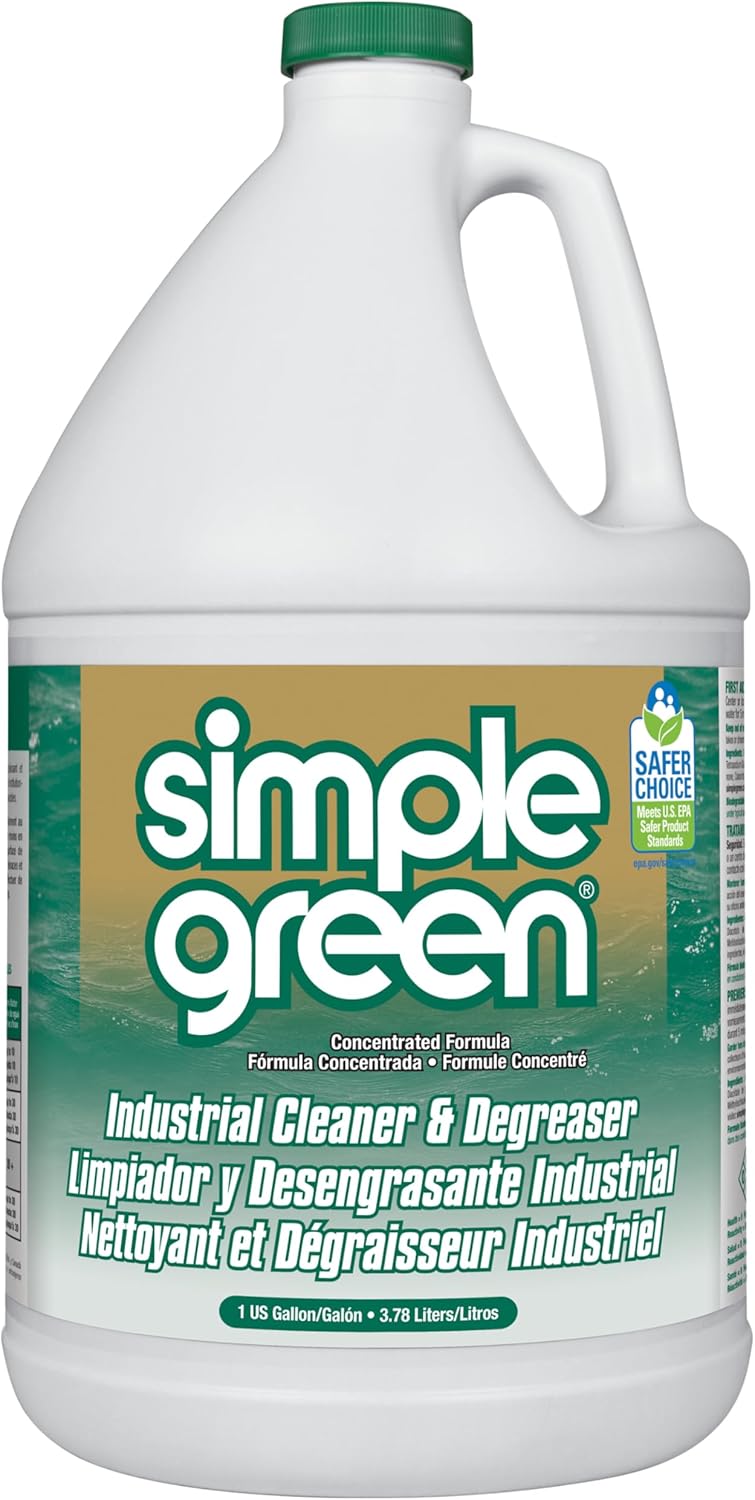
KÄRCHER Vehicle Wash and Wax, Pressure Washer Detergent | Cleans Cars, Bikes,...
Foams well, won't strip wax if diluted right
Pricey for what you get
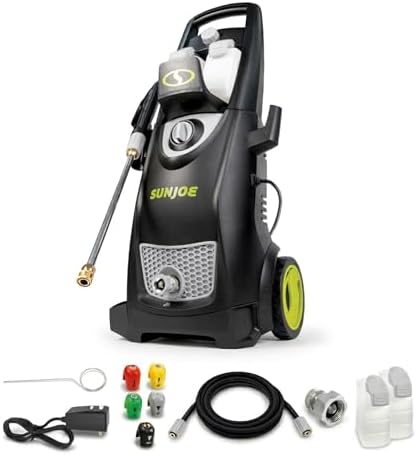
Sun Joe Foaming Soap
Cheap, foams thick, works with the SPX3000
The low price comes with fewer refinements than the stronger picks.
Prices and availability were captured from Amazon Creators API and may change.
Pressure washer detergent is basically car soap with a marketing department. The job is to lower the surface tension of water so it can stick to dirt, grease, and road grime instead of beading up and rolling off.
When I started detailing, I used dish soap because that's what my grandfather used on his boat. It works, but it leaves a film and strips wax.
Then I moved to actual car wash soap, which is better, but doesn't foam the way the YouTube videos promise.
Then I found the stuff the pros use, and the difference is real.
The two numbers that matter on a jug of detergent are dilution ratio and pH. Dilution is how much water you mix with the soap. Most pressure washer detergent siphons at a 10:1 or 20:1 ratio, meaning you dilute the concentrate with 10 to 20 parts water before it hits the surface.
pH is whether it's acidic or basic. Acidic detergents (pH below 7) are for mineral deposits, rust, and concrete.
Basic detergents (pH above 7) are for grease, oil, and organic grime. Neutral pH (around 7) is for cars and anything with wax or sealant you don't want to strip.
I've used everything from Purple Power to Simple Green to the $80-a-gallon stuff the marine detailers swear by. The cheap stuff works fine for driveways and siding. The expensive stuff is worth it if you're washing a car or a boat and you care about the finish.
Siphon Tubes and Why They Suck
Every pressure washer has a detergent system, and half of them are garbage. The siphon tube is the little hose that draws soap from the jug into the water stream. On cheap units, it's a thin plastic tube with a filter on the end that clogs after one job. On better units, it's a wider tube with a brass fitting that you can clean without throwing the whole washer away.
The Sun Joe SPX3000 has a decent siphon system for a $120 unit. It actually draws soap, which is more than I can say for some $500 washers I've tested. The problem is the reservoir is small, so you're constantly refilling it, and the siphon tube gets brittle after a year in the sun.
The Simpson Megashot has a better system. The tube is wider, the fitting is brass, and the reservoir is big enough that you can finish a driveway without stopping.
If your siphon tube stops drawing after 10 minutes, it's clogged. Pull it out, blow through it backwards, and try again. If that doesn't work, replace it. A new tube costs $8, which is less than buying a whole new washer because the soap line broke.
Detergent Types and When to Use Them
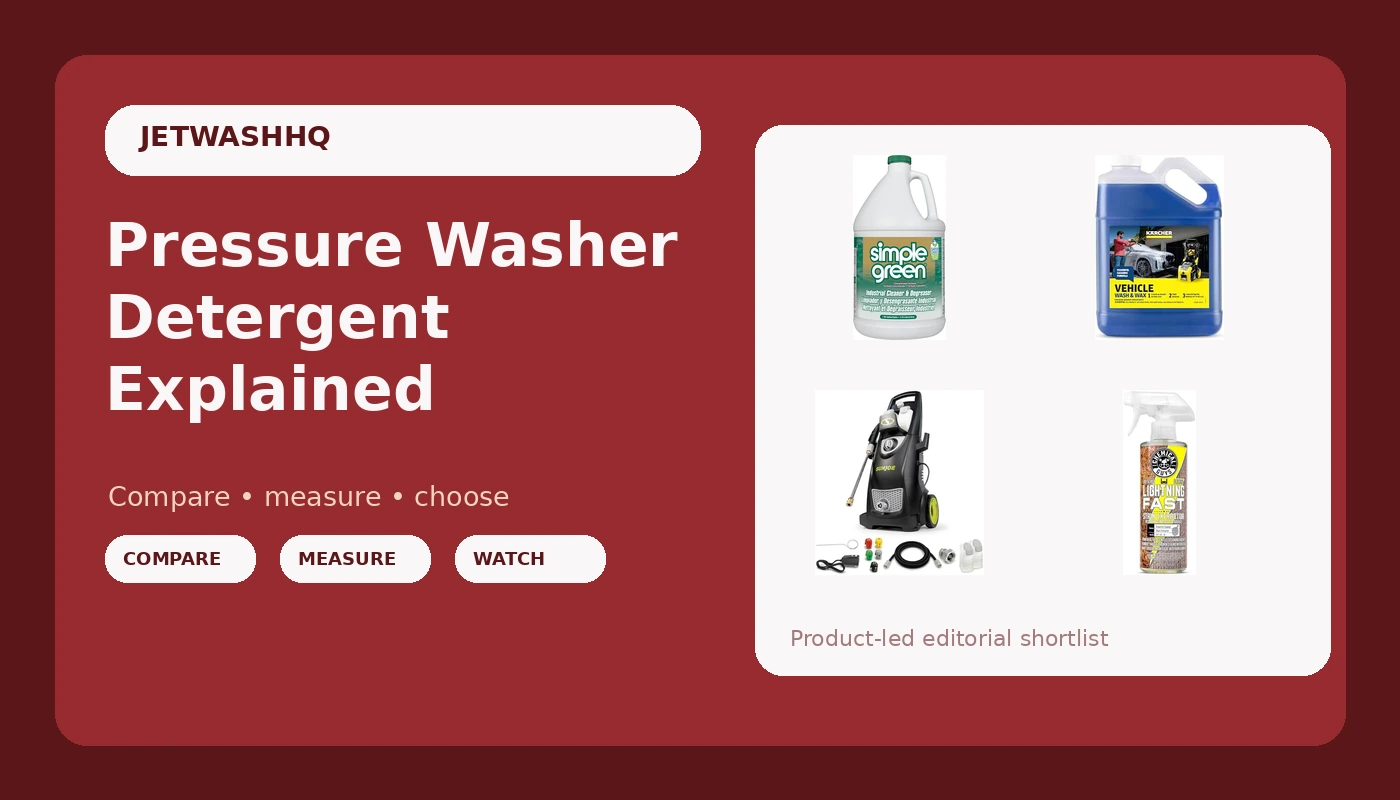
All-purpose cleaner. This is the workhorse. It handles dirt, grime, light grease, and road film. Simple Green 13005 is the one I keep in the van. It's $18 a gallon, it works on everything from driveways to patio furniture, and it rinses clean without leaving a film. The smell is chemical, but that's the trade-off for a detergent that actually cuts grease.
Car wash soap. This is what you want if you're washing a vehicle with wax or sealant. The pH is neutral, so it won't strip protection, and it's designed to foam thick so you can see where you've sprayed.
Kärcher Vehicle Wash is fine. Chemical Guys Honeydew is overpriced but smells like candy. Meguiar's Gold Class is the middle ground.
Whatever you use, don't use dish soap. It'll strip wax and leave a film that attracts dirt.
Concrete cleaner. This is the heavy stuff. It's acidic, so it dissolves mineral deposits and rust. Use it on driveways, sidewalks, and pool decks. Don't use it on cars, it'll etch the paint. I've used it to clean concrete that's been stained for years, and it works, but you have to neutralize it with water afterward or the acid keeps eating.
Degreaser. This is what you use on engine bays, oil stains, and anything with petroleum on it. It's basic, so it saponifies grease and turns it into soap you can rinse off. Purple Power is the cheap option. Simple Green Heavy Duty is better. The pros use stuff that costs $30 a gallon and works in 30 seconds.
House wash. This is for siding, decks, and outdoor furniture. It's gentle enough not to damage wood or paint, but strong enough to remove mildew and algae. I've used it on vinyl siding that's been green for a decade, and it works without bleaching the surface.
Foam Cannons: The Honest Truth
Every video on the internet shows a foam cannon producing thick shaving-cream foam that clings to the car for five minutes. That's a lie. Foam that thick requires a foam cannon with a 1-liter bottle, a pressure washer putting out 2.5 GPM or more, and a detergent that's been diluted to the right ratio. If you have a 1.76 GPM electric washer like the Sun Joe, you're getting wet bubbles, not foam.
I've tested a dozen foam cannons. The cheap ones ($20) produce foam that dies in 10 seconds. The expensive ones ($60) produce foam that lasts 2 minutes if you dilute the soap right. The difference is the orifice size and the bottle design. Bigger orifice, more air, thicker foam. Smaller orifice, less air, wetter foam.
If you want foam that lasts, you need a gas washer with at least 2.5 GPM. The Simpson Megashot puts out 2.5 GPM, which is enough for decent foam. The Sun Joe puts out 1.76 GPM, which is enough for soap suds. There's a difference.
Dilution Ratios: How Much Soap Per Gallon
Most pressure washer detergent is concentrate. You dilute it with water before it hits the surface. The dilution ratio depends on the soap and the job.
- All-purpose cleaner: 10:1 for heavy grime, 20:1 for light cleaning
- Car wash soap: 100:1 to 200:1, since car soap is already mild
- Concrete cleaner: 4:1 to 10:1, since you're dissolving mineral deposits
- Degreaser: 4:1 to 10:1, since you're cutting petroleum
The siphon tube on most washers draws at a fixed ratio, usually around 10:1. If you need a different ratio, you have to dilute the concentrate in the jug before you start. I've done this with concrete cleaner because the siphon tube was drawing too much acid and etching the surface.
What I Keep in the Van
I run a mobile detailing business out of a Sprinter van, so I need detergent that works in the field without taking up half the cargo area. Here's what's in there right now.
Simple Green 13005. Two gallons. This is the workhorse. I use it on driveways, siding, patio furniture, and anything that doesn't have a specific requirement. $18 a gallon, cheap, works.
Meguiar's Gold Class. One gallon. This is for cars with wax or sealant. The pH is neutral, so it won't strip protection. $20 a gallon, mid-range price, works better than the cheap stuff.
Purple Power. One gallon. This is for engine bays and oil stains. It's basic, so it cuts grease fast. $8 a gallon, cheap, smells terrible.
Chemical Guys Honeydew. Half a gallon. I bought this for the smell, honestly. It works fine, but it's $32 a gallon and the foam doesn't last any longer than the cheaper stuff. I'd skip it next time.
Defoamer. One quart. This is for when I'm washing a car and don't want foam flying everywhere. You spray it on the surface before you foam, and the foam dies on contact. $15 a quart, worth it if you're doing mobile work in a customer's driveway.
Should You Buy the Expensive Stuff?
Short answer: no, unless you have a specific reason.
The $40-a-gallon detergent from the marine supply store is better than the $8-a-gallon stuff from the auto parts store, but not $32 better. The difference is concentration, pH balance, and additives like corrosion inhibitors. If you're washing a boat in salt water, the expensive stuff is worth it because it prevents rust. If you're washing a driveway, the cheap stuff is fine.
I've spent the last 12 years trying everything from dollar-store dish soap to the pro-grade stuff the detailers on the forums swear by. The honest answer is that the detergent matters less than the technique.
A $150 washer with the right nozzle and the right soap will beat a $500 washer with the wrong nozzle and the wrong soap.
The detergent is maybe 20% of the job. The other 80% is GPM, nozzle selection, and how close you hold the wand.
What I'm Testing Next
I'm running a comparison right now between four degreasers on a concrete driveway that's got 10 years of oil stains. Purple Power, Simple Green Heavy Duty, the $30-a-gallon marine stuff, and a cheap no-name brand from the hardware store. I'll post the results when I've got photos. So far the marine stuff is winning, but it's not $22 better than the Simple Green.
I'm also testing a new foam cannon that claims to produce "shaving cream foam" on a 1.76 GPM electric washer. If it works, it's a real upgrade for people who don't have a gas unit. If it doesn't, it's going back.
Updated October 2026. The Sun Joe detergent system still works, the Megashot still draws soap like a champ, and I'm still using Simple Green for 80% of my jobs.