Related: Pressure Washer Nozzle Colors: What Each One Actually Does
Most people shopping an electric vs gas pressure washer start with the PSI number on the front of the box, and that is the first mistake. Pressure is how the water feels on your hand. Flow is what carries dirt off concrete. A machine rated 3200 PSI with weak flow loses to a machine rated 2300 PSI with honest flow, every single time, on every surface I have ever cleaned.
I have run a mobile detailing business out of Tampa for twelve years. Driveways, decks, boat hulls, a client's moldy fence that keeps coming back no matter what I throw at it. I own an electric unit for light work, a gas unit for serious jobs, and a cheap third one I bought to test that died inside a month. That last machine taught me more about pressure washers than the other two combined, because it failed on the two things nobody advertises: detergent draw and hose quality.
This is the setup I would put together today if I were starting from zero, using four pieces that cover almost every job a homeowner or a small operator runs into.
Best Overall for Most Homes: Westinghouse ePX3100 Electric Pressure Washer
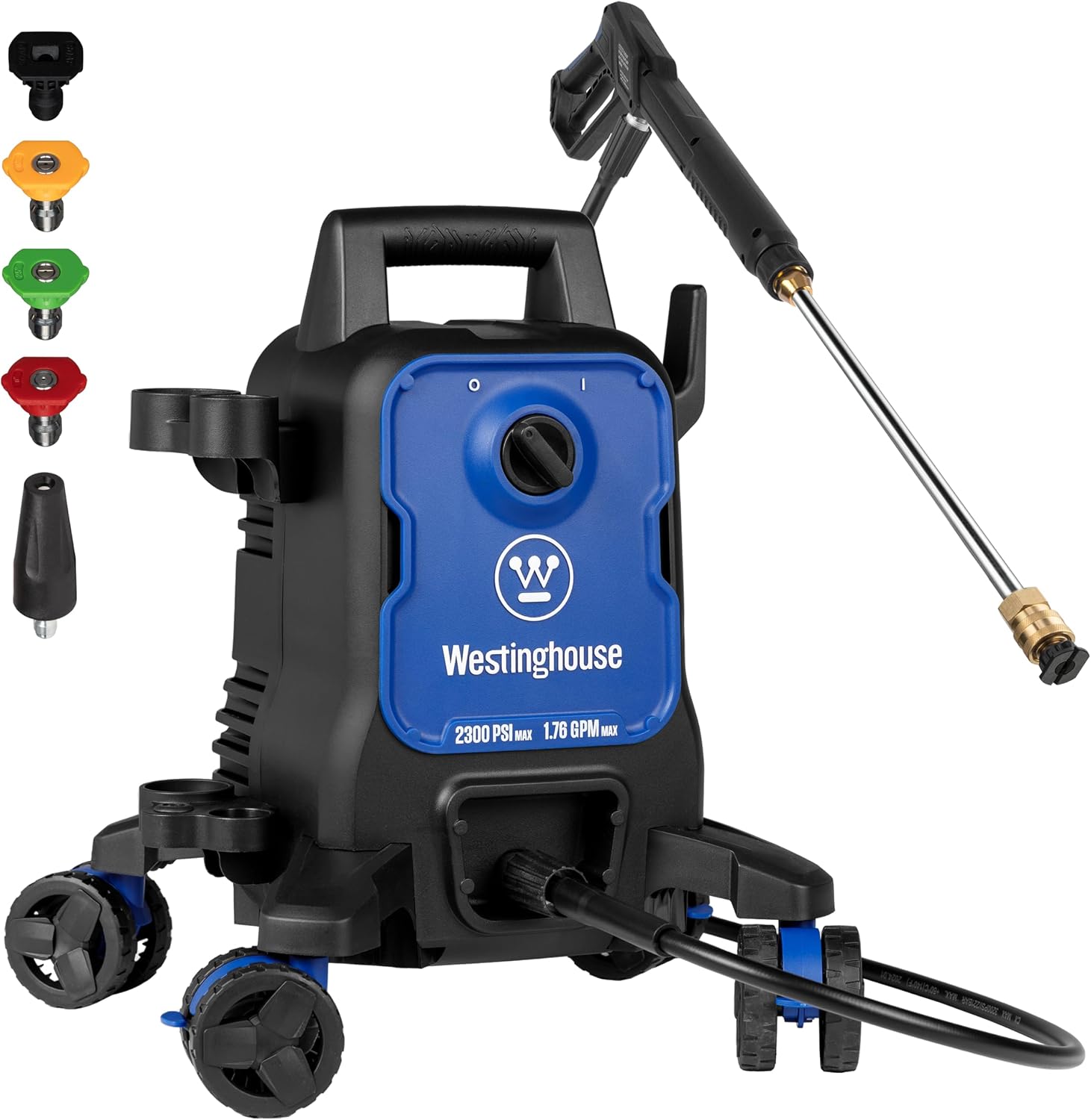
Electric is fine for about 90% of people, and I will keep saying that until the gas crowd gets tired of hearing it. The ePX3100 lists 2300 max PSI and 1.76 max GPM, and that second number is the one I care about. A 1.76 GPM machine with the right nozzle does real work: a sedan, a patio, a set of vinyl siding, a wooden fence, a grill, a couple of garbage cans that have been growing something since spring.
The onboard soap tank is not a gimmick. A washer that cannot draw its own detergent is a hose with a trigger, and you end up standing there with a spray bottle like it is 1998. Onboard tanks are also less fussy than the siphon-tube setups that clog if you look at them wrong.
The pro-style steel wand matters more than people expect. Cheap wands flex, the fittings weep, and the whole thing feels like a toy in your hand after twenty minutes. A steel wand with a proper grip is the difference between finishing the driveway and quitting halfway.
Anti-tipping technology sounds like marketing until you work on a sloped driveway. A tall electric unit on an incline wants to go over, and a machine that has fallen while running is a machine you should not trust. That feature earns its place.
What you give up is duty cycle and freedom. There is a cord, there is an outlet, and there is a limit to how long you can run it before you should let it rest. If you are washing one car and one patio on a Saturday, you will never notice. If you are washing a whole house every weekend, you will.
Best for Serious Jobs: Westinghouse WPX3200 Gas Pressure Washer
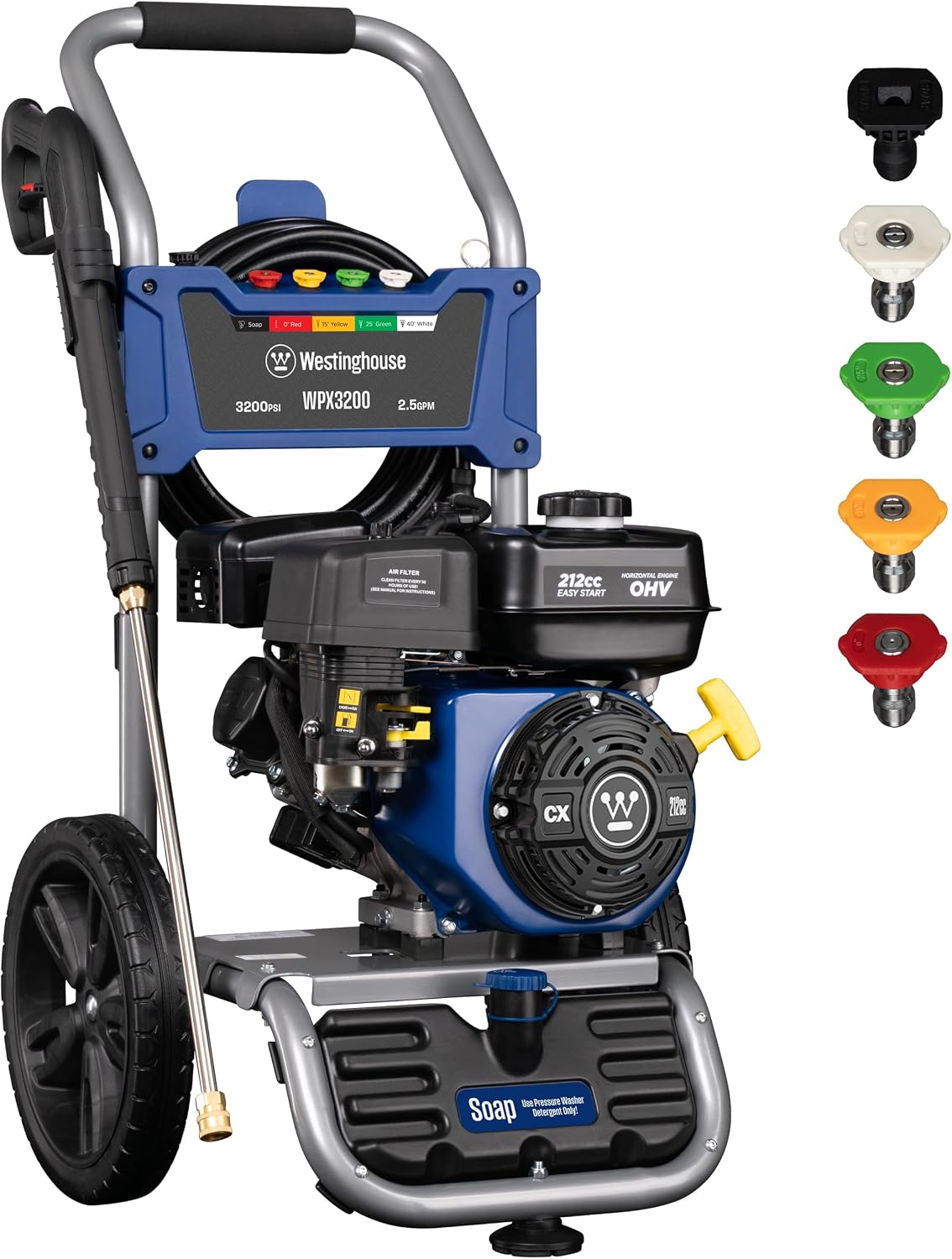
The WPX3200 lists 3200 PSI and 2.5 GPM, and I want you to sit with the flow number for a second. That is roughly 42% more water per minute than the electric above. Flow is what rinses a driveway, what pushes a boat hull clean, what makes a two-car slab take an afternoon instead of a weekend.
This is the machine for boat season, for the long driveway, for anyone who washes for money or for a neighborhood. It has an onboard soap tank, a spray gun and wand, and a five-nozzle set, so you are not buying accessories on day one.
It is also loud, it is heavy, and it wants fuel and oil and a place to live that is not your garage shelf. Gas machines have a maintenance bill attached that nobody mentions in the listing: stabilize the fuel, change the oil, run it dry before you store it for the winter, and expect it to demand attention in a way the electric never will. I make fun of how loud mine is and I still start it first when there is real work to do.
If you are going to buy one gas machine, buy one with honest flow and an onboard tank. This is that machine.
The Upgrade Nobody Talks About: Simpson 50ft Monster Cold Water Pressure Washer Hose
Ask anyone who pressure washes regularly what they hate about their setup and they will not say PSI. They will say the hose. A stiff hose kinks every five feet, fights you around every corner, and drags the machine across the concrete because you ran out of length at the worst possible moment.
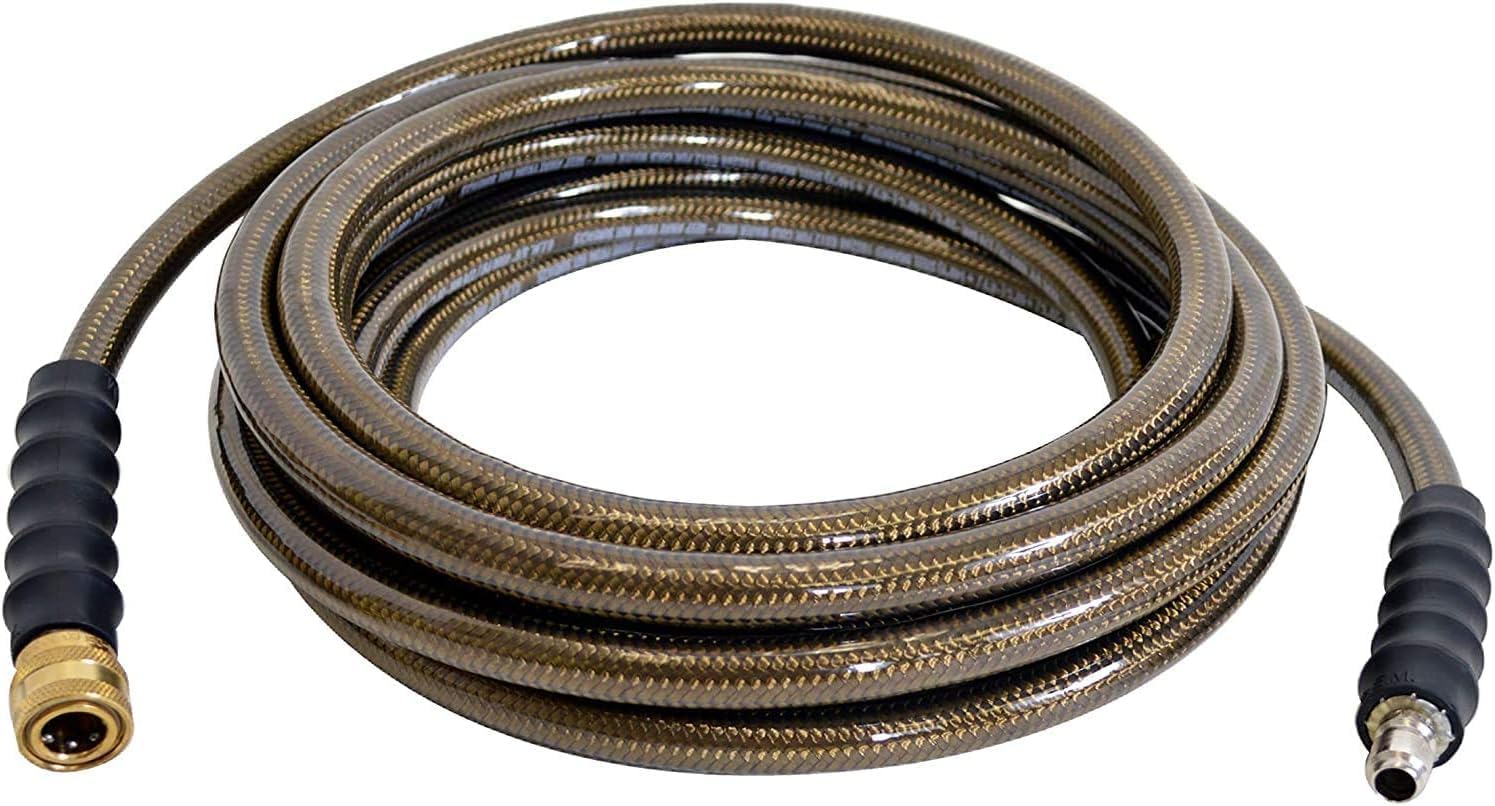
The Simpson Monster hose is 50 feet of 3/8 inch cold water line rated to 4500 PSI. Three things about that. First, the length: 50 feet means you park the machine once and walk the wand, instead of relocating the whole unit four times per job. Second, the bore: a 3/8 inch hose moves more water than the thin factory lines that come in the box, and it does not starve a machine that can actually flow. Third, the rating: 4500 PSI is headroom well above anything either washer in this article will produce, which means the hose is never the weak link.
Two honest notes. It is a cold water hose, so it belongs on a cold water machine, not a hot water unit. And it is heavier than the thin stock hose it replaces. That weight is the price of not fighting a kink every thirty seconds, and I will pay it every time.
If you own a pressure washer and you have never replaced the hose, this is the single cheapest way to make the machine feel like a better machine.
The Cheap Add-On That Earns Its Place: Hydro Jet High Pressure Power Washer Gun
This is not a pressure washer. It is a wand that threads onto a garden hose, and it cleans with whatever your spigot delivers. Say that out loud before you buy it, because the reviews that call it useless are written by people who expected 3000 PSI from a hose.
What it is good at: second story windows, screens, gutter faces, patio furniture, a quick rinse on a car between real washes, the siding under the eaves where you cannot get a machine. It comes with an adjustable type and a fan type nozzle, and the extendable reach is the whole point. For light jobs where dragging out a machine is more work than the job itself, it is the right tool.
What it is not good at: stripping paint, cleaning a driveway, or anything where the dirt has bonded to the surface. Garden hose pressure does not remove years of grime from concrete, and no nozzle on the end of this thing will change that.
I keep one hanging by the spigot. It gets used more often than the big machines because most jobs around a house are small.
How I judge a pressure washer setup
I do not rank machines by the number on the box. I rank them by four things, in this order.
Flow rate first. Gallons per minute is the cleaning power. A machine that moves more water rinses more dirt, and no amount of PSI marketing changes that math.
Detergent draw second. If it cannot pull soap from a tank on its own, you are doing the work by hand. Onboard tanks beat siphon tubes, and both beat a spray bottle.
Hose and wand quality third. This is where budget machines quietly fail. Thin hoses kink, plastic wands flex, and fittings weep. If the hose and wand are junk, the pump does not matter, because you will hate using the machine.
Nozzle set fourth. A five-nozzle set gives you a 0 degree pencil for stubborn stains, a 15 and 25 degree for general work, a 40 degree for rinsing, and a soap nozzle for detergent. A machine that ships with a full set is a machine you can actually use on day one. The nozzle is the machine, and I mean that literally: the same washer with the wrong tip will damage a deck, and with the right tip will clean it beautifully.
What the numbers actually mean
PSI without GPM is a lie, and I will die on that hill. Pressure is a feeling. Flow is the work. When you see a listing that screams a huge PSI number and buries the flow rate, that is a machine telling you what it does not have.
The two Westinghouse machines here illustrate the point. The ePX3100 at 1.76 max GPM is a real homeowner tool. The WPX3200 at 2.5 max GPM is a machine that cuts your time on flatwork substantially, which is exactly why it costs more and weighs more and needs fuel.
Nozzle orifice is the other number nobody prints. Water only leaves the tip as fast as the tip allows. Put a small orifice on a high-flow machine and you choke it. Put a big orifice on a weak machine and you get a wide, useless fan of water. This is why the factory nozzle set matters and why mismatched aftermarket tips make people think their washer is broken.
Detergent systems fail in predictable ways. Siphon tubes clog, filters get gunked up, and check valves stick. An onboard tank with a proper pickup is more reliable, and if you run thick soaps, dilute them. A clogged detergent system turns a pressure washer into a very expensive hose.
Duty cycle is where cheap electrics lose. Gas machines run as long as you feed them. Electric machines want breaks. If your job takes longer than the machine can run, you have bought the wrong machine, no matter how good the specs look.
Hose bore is the quiet spec. A 3/8 inch hose flows more than a 1/4 inch hose, and if your machine can produce real flow, a thin hose strangles it before the water ever reaches the wand.
The pressure washer setup reference table
This is how the four pieces fit together. Every row is a part of the same setup, not a competing machine.
| Product | Type | Job it is built for | Notes |
|---|---|---|---|
 Visit on Amazon → Visit on Amazon →Westinghouse ePX3100 Electric |
Electric, corded | Cars, patios, siding, fences, grills | 2300 max PSI, 1.76 max GPM, onboard soap tank, steel wand, 5 nozzles. Check current Amazon price |
 Visit on Amazon → Visit on Amazon →Westinghouse WPX3200 Gas |
Gas | Driveways, boats, large flatwork, weekly use | 3200 PSI, 2.5 GPM, onboard soap tank, spray gun and wand, 5 nozzles. Check current Amazon price |
 Visit on Amazon → Visit on Amazon →Simpson 50ft Monster Hose |
Hose, cold water | Extending either machine | 50 ft, 3/8 inch, rated 4500 PSI. Cold water only. Check current Amazon price |
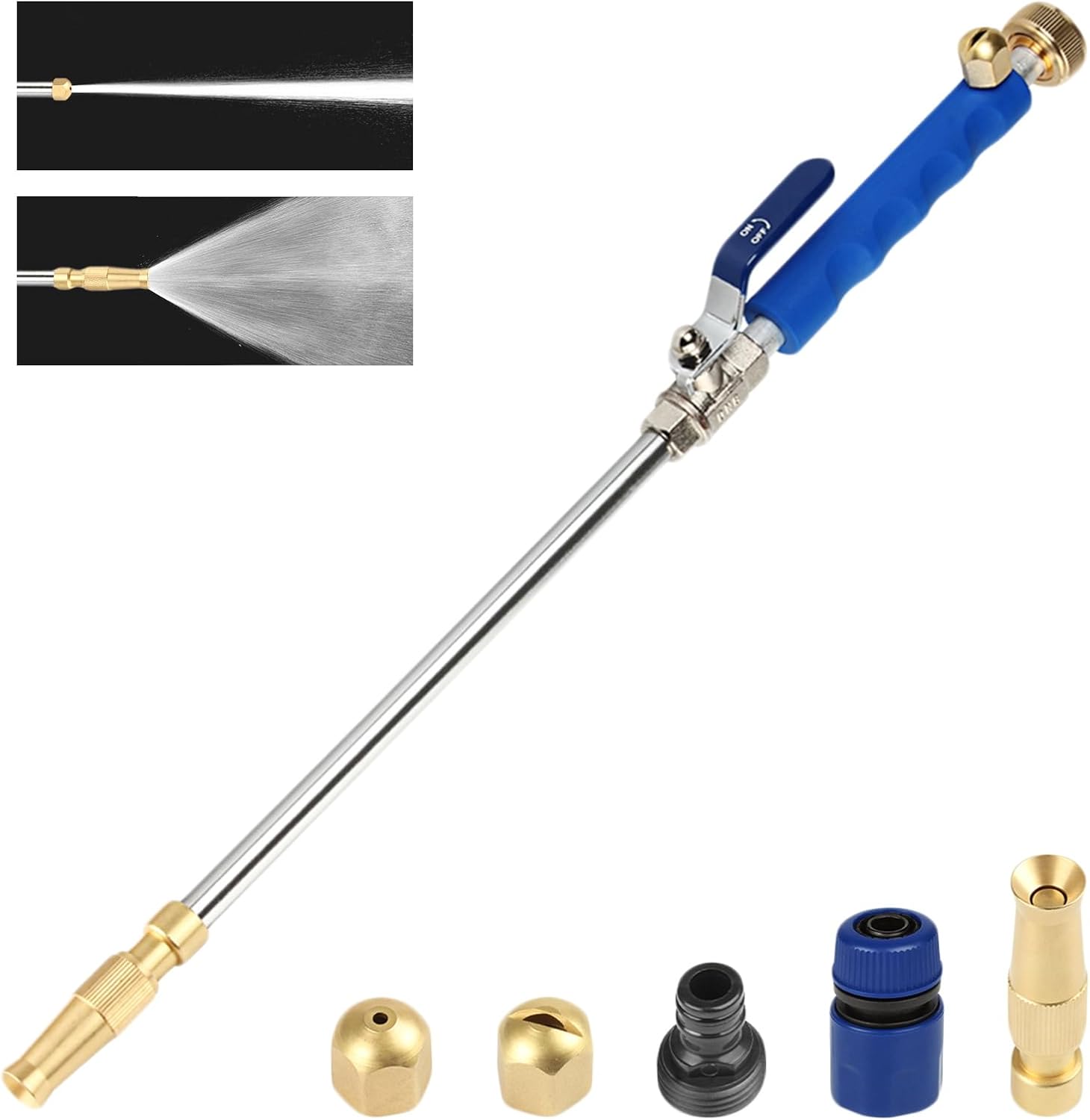 Visit on Amazon → Visit on Amazon →Hydro Jet Power Washer Gun |
Hose-end wand | Windows, screens, furniture, light rinses | Runs off garden hose pressure, adjustable and fan nozzles, extendable reach. Check current Amazon price |
Read that table as a build, not a ranking. The machine does the work. The hose decides whether the work is pleasant. The wand covers the jobs too small to justify hauling out the machine.
Should you buy the Westinghouse ePX3100?
Yes, if you are a normal homeowner with a car, a patio, and some siding. It lists 1.76 max GPM, which is honest flow for an electric unit, and the onboard soap tank means you are not fighting a siphon tube on every job. The steel wand and the five-nozzle set mean you do not have to buy anything else to start.
The compromises are real but predictable. You need an outlet. You need to respect the duty cycle. You will spend more time on a long driveway than you would with gas. For 90% of households, none of that matters, and this is the machine I would hand a friend who asked what to buy.
Should you buy the Westinghouse WPX3200?
Yes, if you have a boat, a long driveway, a big fence, or customers. The 2.5 GPM flow rate is the reason, not the 3200 PSI. That flow is what makes flatwork fast, and speed is what turns a job into a business instead of a chore.
Go in knowing what gas costs you beyond the sticker: fuel, oil, noise, weight, and a storage spot that is not next to the paint cans. If you wash weekly or you wash for money, that is a fair trade. If you wash twice a year, it is not.
Should you buy the Simpson Monster hose?
Yes, if you own any pressure washer with a short, stiff stock hose. The 50 foot length, the 3/8 inch bore, and the 4500 PSI rating solve the three problems that make pressure washing annoying: reaching, flow, and kinking. Just remember it is a cold water hose, so pair it with a cold water machine.
Should you buy the Hydro Jet power washer gun?
Yes, as a second tool, not as your only one. It threads onto a garden hose, so it will never replace a pressure washer on concrete. But for windows, screens, gutters, and patio furniture, it saves you a full setup for a five minute job. That is the whole value proposition, and for the money it is an easy call.